
Tools for nature

Tools for nature

How our upgraded wildlife recording kits can bring communities closer to wildlife

Tools for communities 

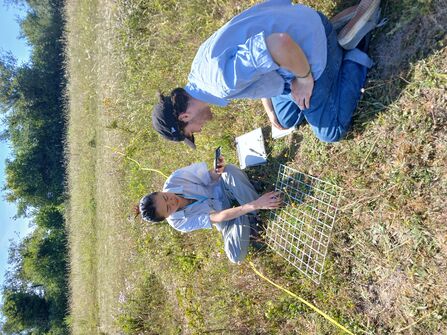
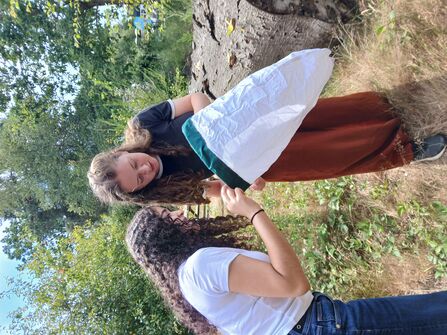
We’re pleased to offer our updated ‘Wildlife Recording Kits’, providing communities with the tools and resources to undertake wildlife surveys and monitoring in their local green spaces. Whether you’re running a neighbourhood bioblitz, community group survey or carrying out a regular species survey, our kits make it easier and more cost effective to record wildlife and support your surveying effort.  

Our ‘Wildlife Recording Kits’ cover various surveying methodologies and species, ranging from recording plants, invertebrates, pond life, bats, small mammals and moths, using various specialised equipment.

As part of our ongoing commitment to improve community-led conservation and ecological monitoring, we have recently reviewed, updated and expanded our wildlife recording kits available to borrow at our Pirbright HQ! Our new improved kits now contain updated models of equipment, such as echo meters to identify bat calls and much more. We have also improved our environmental testing kits, including soil tests for pH, potash, phosphorus and nitrogen, as well as pH and nitrite/nitrate water strips to support water quality testing. We have also added various practical items such as magnifying glasses, specimen pots, wildlife guides, pond and sweep nets and tape measures to accommodate for larger community groups. We’re really excited about the changes that we’ve made to the kit, and look forward to seeing what community groups will find on their surveys!
Why record wildlife? 

Whether you’re a solo recorder or part of a community group, recording and surveying wildlife plays a vital role in understanding and protecting our natural world and the species that inhabit it. Recording also helps people connect and care about nature, helping them to make informed wildlife management decisions and build a stronger picture of biodiversity across Surrey.

Supporting connection with nature

Wildlife recording brings people outside and provides a hands-on experience in caring and exploring the local environment. By giving communities access to equipment, we hope it will make it easier for groups to run their own bioblitzes, surveys and events, removing barriers and making participation more convenient and affordable. This means that exploring wildlife is no longer something that feels out of reach, but something that can be done locally with your own community.

Through these activities, communities can begin to better understand their local green spaces and the species that inhabit them. Over time, this builds confidence, not just in identifying species, but in recognising what healthy habitats look like and how to support them.

A good kit to use with all ages. Our family nature club loved bug hunting in the meadows using it and it's a great way to get people interested in invertebrates.– Invertebrate kit borrowed by Hive Helpers

Reaching Surrey's hidden green spaces

Community-led surveying helps to support Surrey’s nature recovery, by reaching green spaces that are often overlooked or difficult to access. Surveying areas such as gardens, parks, churchyards, allotments and other community green spaces help build a clearer picture of the ecological diversity inhabiting Surrey and bridging the survey effort gap. In turn, this empowers residents to manage and improve these areas to support wildlife, ensuring habitats and species are protected and can thrive. 

Understanding trends 

A better understanding of local habitats and species can help guide future management decisions. Data collection through wildlife recording allows communities to see how their green spaces are changing over time and how different management activities are impacting wildlife. 

However, local data can also contribute to a national and global picture. By submitting your data to a local record centre, such as Surrey Biodiversity Information Centre (SBIC), not only do you help to build a more comprehensive picture of Surrey’s biodiversity, but contribute to datasets which can be studied, understood and shared on a national scale. Through biodiversity monitoring, we can follow trends in species distribution and abundance, however, this will only be relevant if data is current and ongoing, showing the importance of local surveying effort. Please visit SBIC’s website for more information on how you can share your survey data and contact their enquiry service if you have any questions. 

We hope that, through our Wildlife Recording Kits, your community will have the tools to get involved in local monitoring, gain a deeper understanding of the wildlife around you and implement the best ways to support it. You can book our Wildlife Recording Kits on our website and please feel free to email us at communities@surreywt.org.uk for any further questions!