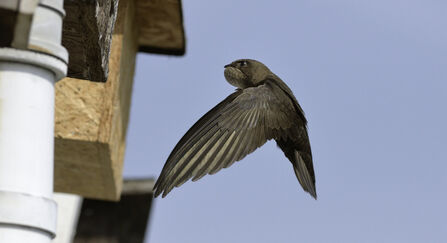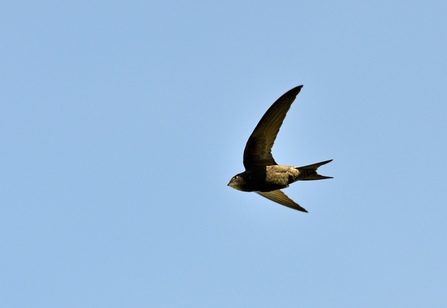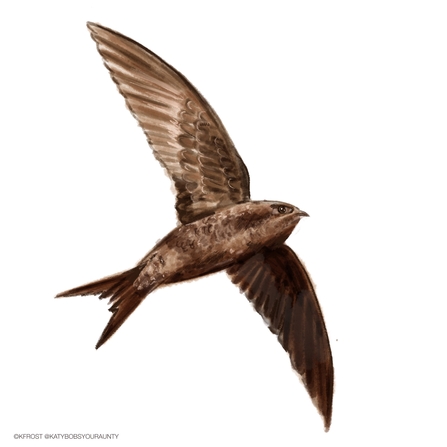
In Surrey, we're lucky to have a fantastic network of community Swift groups and projects working to protect these remarkable birds - explore what's happening during the week with the Surrey Swift Collective.
From April onwards, the Common Swift starts to arrive in the UK, having undertaken an impressive migratory journey of more than 6000 miles in approximately four weeks. A summer visitor, these remarkable birds migrate from Africa to the UK, where they breed, nest and raise their chicks before leaving in August for more tropical climes. They will undertake this trip every year and throughout their lifetime can fly around 2 million miles – equivalent to more than four trips to the moon and back - an epic voyage and one of the longest migration journeys in the world.
These birds are true aerial masters, eating, bathing, sleeping and even mating on the wing! They bathe by flying slowly through falling rain and are able to switch half their brain off whilst flying, allowing them to sleep in mid-air! They only ever land to nest so you're unlikely to see a grounded Swift unless it is injured.
Swifts love to nest in the nooks, crannies and crevices of old buildings, churches and walls and are therefore often seen in urban areas. They pair for life and are 'nest site faithful', meaning they will return to the same nest each year to raise young. However, this imprinting behaviour can also be to their detriment, as increased building demolition and renovation means that Swift nest sites are being lost at an alarming rate. This has sadly led to the species being listed on the UK’s Red List of Birds of Conservation Concern. Climate change, changes in how buildings are designed and the loss of insects led Swift numbers to fall by a shocking 62% between 1995 and 2021.
Swifts need practical action if their numbers are to recover. The most effective way to help is by installing Swift boxes on your property, or encouraging friends and neighbours to do the same. If installing boxes isn't an option, boosting local insect populations through wildlife-friendly gardening, such as leaving areas of grass unmown, planting native species or creating a wildlife pond, can make a real difference. For more ideas, see the Wild about Gardens Swifts, Swallows and Martins guide.